The ocean covers most of Earth's surface, produces a significant portion of the oxygen we breathe, regulates global temperatures, and feeds billions of people. Yet ocean health has been declining for decades — and the consequences extend far beyond the coastline. Whether you live near the sea or deep inland, what happens to the ocean shapes your world in ways most people never fully consider.
Ocean health refers to the ocean's ability to function as a stable, productive, and resilient ecosystem over time. A healthy ocean supports diverse marine life, maintains chemical balance, absorbs and cycles heat and carbon, and sustains the food webs that humans and countless other species depend on.
Researchers typically assess ocean health across several dimensions:
When any of these dimensions falters, the effects ripple outward in ways that are difficult to isolate or reverse.
Ocean decline isn't driven by a single cause. It's the product of several overlapping stressors that compound each other's effects.
The ocean absorbs a substantial share of the excess heat generated by greenhouse gas emissions. That warming disrupts marine ecosystems in multiple ways. It drives coral bleaching, where corals expel the algae they depend on for nutrition and often die. It shifts the geographic ranges of fish and other species, disrupting food webs. It also weakens the temperature gradients that drive major ocean circulation systems.
As the ocean absorbs carbon dioxide from the atmosphere, seawater becomes more acidic. This process — ocean acidification — threatens organisms that build shells or skeletons from calcium carbonate, including oysters, clams, sea urchins, and coral. Since many of these species form the foundation of larger food chains, their vulnerability has cascading consequences for entire ecosystems, including commercial fisheries.
Warmer water holds less dissolved oxygen, and nutrient runoff from agriculture and wastewater creates dead zones — areas where oxygen levels fall so low that most marine life cannot survive. Dead zones have been documented in coastal regions around the world and tend to expand during warmer months.
Overfishing depletes fish populations faster than they can reproduce. This disrupts predator-prey relationships, reduces biodiversity, and can push some species toward collapse. The problem is worsened by bycatch — the unintentional capture of non-target species, including sea turtles, dolphins, and juvenile fish that haven't yet reproduced.
Plastic pollution is now found at virtually every depth and in every region of the ocean. Microplastics — tiny fragments from degraded plastic items — have been detected inside fish, marine mammals, and sea birds. Beyond plastic, agricultural runoff, industrial chemicals, and pharmaceutical residues accumulate in marine environments and move up the food chain through bioaccumulation.
It's easy to think of ocean health as a remote environmental concern. The reality is more immediate.
Phytoplankton — microscopic marine organisms — are responsible for producing a large share of Earth's atmospheric oxygen. They also form the base of almost all marine food chains. As ocean temperatures rise and nutrient cycles shift, phytoplankton populations can decline or redistribute, with effects that extend well beyond the water.
The ocean also acts as Earth's primary heat buffer, absorbing enormous amounts of solar energy and redistributing it through circulation systems. Disruptions to these systems influence rainfall patterns, storm intensity, and seasonal temperatures on land — affecting agriculture, water supply, and extreme weather events across entire continents.
Hundreds of millions of people rely on seafood as a primary protein source. Fisheries support the livelihoods of communities from Southeast Asia to West Africa to the Pacific Islands. When fish stocks collapse or shift ranges due to warming, the effects show up as higher food prices, reduced availability, and economic disruption — including in countries far from any ocean.
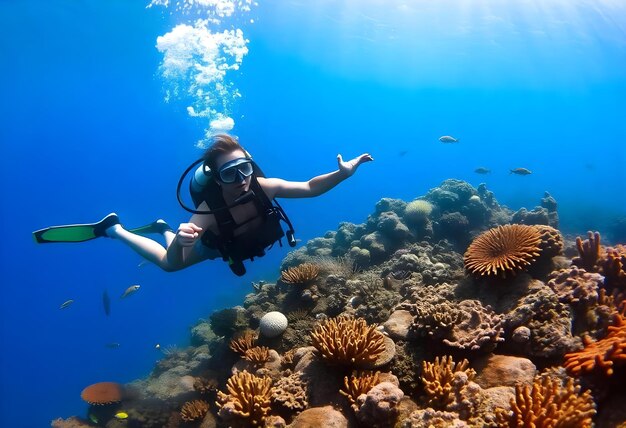
Sea level rise, driven in part by warming-related ice melt and the thermal expansion of seawater, threatens coastal cities, infrastructure, and low-lying communities worldwide. Coral reefs — which are dying at accelerating rates — serve as natural breakwaters that protect coastlines from storm surge and erosion. Their loss increases the vulnerability of coastal populations even before considering the tourism and fishery revenue they support.
Marine scientists use a growing array of tools to monitor ocean health, including:
| Monitoring Tool | What It Measures |
|---|---|
| Satellite ocean color sensors | Phytoplankton abundance and distribution |
| Autonomous underwater vehicles | Temperature, salinity, oxygen at depth |
| Coral monitoring networks | Bleaching events and reef recovery rates |
| Ocean acidification buoys | pH levels and carbonate chemistry |
| Fisheries stock assessments | Population size and reproductive health of key species |
These tools have enabled researchers to detect changes in ocean systems that would have been invisible just a generation ago. The picture they're building is one of measurable, accelerating change across multiple indicators simultaneously.
Not all parts of the ocean are equally stressed, and not all ecosystems respond to stressors in the same way. Several factors shape how ocean health problems manifest in specific places:
This variability matters because it means ocean health challenges don't have uniform solutions. What works in one region or ecosystem may not apply directly to another.
The trajectory of ocean health depends on choices being made across multiple scales — from international climate agreements to regional fisheries management to individual consumption habits. Researchers point to several categories of intervention that scientific evidence supports in general terms:
How effective any of these approaches will be in a given context depends on political will, economic incentives, technological capacity, and the pace of ecological change — none of which follow a simple or predictable path. 🌍
Understanding ocean health means recognizing that its problems are interconnected with systems you already depend on — food, weather, economics, and air. What's less clear-cut is how any individual, community, or policymaker should prioritize their response. That depends on where you live, what industries and ecosystems matter most to your context, and what levers of action are available to you.
The science on the direction of change is increasingly clear. What remains to be determined — by people, institutions, and societies — is how quickly and decisively that clarity translates into action.