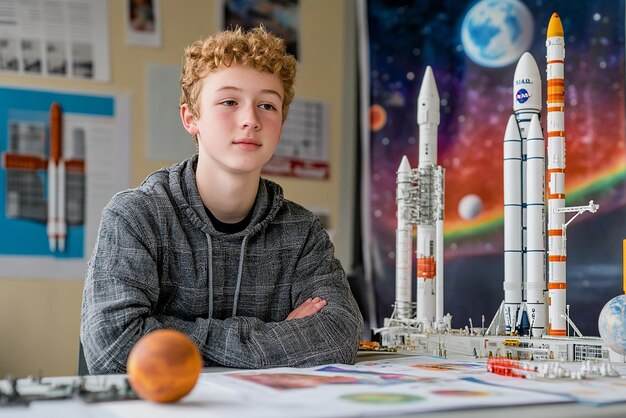
Space exploration sits at the intersection of science, engineering, policy, and human ambition. It draws on physics, chemistry, biology, geology, and dozens of other disciplines — making it one of the most genuinely cross-cutting areas within the broader sciences. Understanding space exploration means grappling with more than rocket launches and distant planets. It means understanding why humans and machines go to space, what we have learned from doing so, what the significant challenges are, and what continues to drive investment and discovery across government agencies, research institutions, and increasingly, private enterprises.
This page is designed to orient you within that landscape — covering the core concepts, the real trade-offs, and the key areas of ongoing inquiry — so you can explore the specific questions most relevant to what you want to understand.
Space exploration refers broadly to the investigation of outer space through the use of astronomy, uncrewed spacecraft, and crewed missions. Within the science category, it occupies a distinct position: unlike laboratory sciences, most space science cannot be replicated in controlled conditions. Observations are often one-time events, equipment cannot easily be repaired, and the environments being studied are extraordinarily difficult to access.
This makes space exploration both scientifically unique and methodologically different from most fields readers encounter. The evidence base develops slowly — a single mission can take a decade from conception to data collection — and findings are often provisional until confirmed by follow-up missions, ground-based observations, or independent modeling.
Space exploration encompasses several overlapping domains:
Each of these areas has its own body of research, its own open questions, and its own mix of well-established findings and active debate.
In most sciences, researchers design experiments, run them repeatedly, adjust variables, and build consensus over time. Space exploration rarely allows this. A mission to Mars takes roughly seven months one way; a probe sent to the outer solar system may travel for decades before reaching its target. This shapes how findings are generated, how confident scientists can be in any single result, and how the field evolves.
Observational data forms the foundation of most space science. Telescopes, spectrometers, and other instruments collect light, radiation, and particle data that scientists then interpret through established physical models. The strength of these interpretations depends on the quality of the instruments, the assumptions built into the models, and whether independent lines of evidence converge on the same conclusion.
In-situ measurements — data gathered directly at a location, such as a rover on Mars or a probe entering a planet's atmosphere — carry a different kind of weight. They reduce inference but introduce other complications: equipment can malfunction, landing sites may not be representative of broader environments, and sample contamination is a genuine concern.
Sample return missions represent the gold standard in terms of data richness, allowing Earth-based laboratories to analyze extraterrestrial materials with tools far more sophisticated than anything that can be sent to space. But these missions are rare, expensive, and technically complex.
Understanding this methodological landscape matters because it affects how confidently any finding should be interpreted. A single orbital observation suggesting water ice on a distant moon is promising but not conclusive. Corroboration from multiple instruments across multiple missions changes the level of confidence significantly.
Not all questions in space exploration are equally answerable with current technology and data. Several factors determine how confident the scientific community is about any given claim:
| Factor | What It Affects |
|---|---|
| Distance and accessibility | Closer objects (Moon, Mars) have more data; outer solar system objects have far less |
| Mission history | Some planets have decades of exploration data; others have been visited once or never |
| Instrument capability | What can be detected depends entirely on what instruments were sent and when |
| Model dependency | Some conclusions rely heavily on theoretical models with limited direct confirmation |
| Sample availability | Direct analysis of physical material yields much higher-confidence results than remote sensing |
These variables mean that scientific understanding is highly uneven across the field. Our knowledge of Mars's geology is relatively detailed; our understanding of the subsurface ocean of Jupiter's moon Europa is largely inferred from gravity data and magnetic field measurements. Both are legitimate science — but the confidence levels are very different.
Human spaceflight introduces a set of questions that go beyond the physical sciences into medicine, psychology, engineering, ethics, and policy. Research on astronauts — necessarily conducted on very small sample sizes — has consistently documented significant physiological changes during extended spaceflight. These include bone density loss, muscle atrophy, fluid shifts that affect vision, and disruptions to the immune system. Researchers have also documented cognitive and psychological challenges associated with isolation, confinement, and communication delays.
Most of this research comes from studies conducted on the International Space Station, involving small numbers of participants over stays ranging from weeks to about a year. This is an important caveat: the evidence base for long-duration deep-space missions (such as a hypothetical journey to Mars) is far more limited than the research on low-Earth orbit. Extrapolating from ISS data to a multi-year deep-space mission involves significant scientific uncertainty, and researchers are candid about this.
The distinction between what we know about human physiology in low-Earth orbit and what we can confidently predict about conditions further out represents one of the genuinely open frontiers in the field.
The overwhelming majority of scientific knowledge about our solar system and beyond has come from uncrewed missions. Robotic probes, landers, orbiters, and space telescopes have fundamentally changed what humanity understands about the cosmos — and continue to generate new findings at a pace that researchers are still working to fully analyze.
Some findings from uncrewed exploration are very well established: the surface composition and geological history of Mars, the presence of complex organic molecules in meteorites, the existence of water ice at the lunar poles, the size and behavior of the solar wind. Others remain actively debated — the interpretation of methane in Mars's atmosphere, for example, has produced competing hypotheses that current data cannot fully resolve.
Space telescopes have transformed cosmology and astrophysics by enabling observations across wavelengths — infrared, ultraviolet, X-ray — that are blocked by Earth's atmosphere. The depth of field available to modern space-based observatories allows researchers to detect galaxies formed within the first billion years of the universe's history. These observations inform and test models of cosmic evolution, but interpreting what they mean for fundamental questions — the nature of dark matter and dark energy, the precise mechanics of the early universe — remains an area of active and sometimes contested research.
Space exploration no longer belongs exclusively to government space agencies. In recent decades, privately funded companies have developed launch vehicles, satellite infrastructure, and plans for crewed missions that would have been implausible without public-sector precedent. This shift has introduced new dynamics into how exploration priorities are set, how risk is evaluated, and what kinds of missions get funded.
The science community engages with this shift with a mix of opportunity and caution. Commercial launch capacity has reduced costs and increased access for scientific payloads. At the same time, commercial priorities don't always align with scientific ones, and questions about data sharing, regulatory oversight, and long-term sustainability of the space environment — including the growing problem of orbital debris — are subjects of genuine policy debate.
Orbital debris, sometimes called space junk, represents a concrete and growing risk to active satellites, space stations, and future missions. The Kessler syndrome — a theoretical cascade effect where collisions generate debris that causes further collisions — is taken seriously by space agencies and researchers, though how close the environment is to such a threshold is a matter of ongoing modeling and debate.
For readers who want to go deeper, space exploration branches into a wide range of specific questions — each with its own body of research and its own current state of knowledge.
The search for life beyond Earth is perhaps the most publicly captivating area. Astrobiology draws on planetary science, chemistry, and biology to assess whether conditions that support life exist or have existed elsewhere. The discovery of exoplanets — planets orbiting other stars — has dramatically expanded the scope of this question, with thousands of confirmed exoplanets now catalogued and atmospheric characterization becoming an active area of telescope research.
Questions about the Moon's future role in exploration — as a potential staging point for deeper missions, a site for scientific investigation, or a resource-extraction target — involve both scientific and policy dimensions that are evolving quickly, with multiple national programs announcing lunar ambitions in recent years.
Mars remains the central focus of crewed mission planning, with both agency and commercial programs developing concepts for human arrival. The scientific, engineering, ethical, and logistical questions involved span enough complexity to warrant sustained reading on their own.
The physics of propulsion, the mechanics of orbital dynamics, the economics of launch costs, the ethics of planetary protection — each of these threads runs through the broader story of space exploration and connects back to questions that working scientists, engineers, and policymakers are actively navigating.
What any of this means for a specific reader's understanding depends on where they're starting from, what questions brought them here, and how deeply they want to engage with any particular thread. The landscape is genuinely vast — and the state of knowledge within it varies considerably depending on which corner of it you're examining.