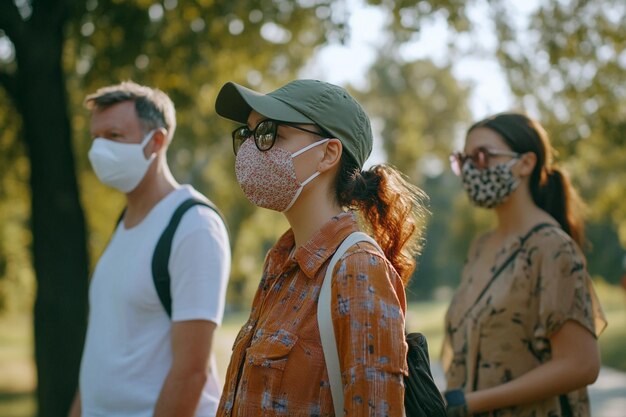
Staying informed about health outbreaks can feel overwhelming — especially when news cycles move fast, terminology shifts, and it's hard to tell what's genuinely urgent versus what's background noise. Understanding how outbreaks work, how they're tracked, and what public health agencies actually do about them helps you make sense of the information coming at you — and make better decisions for yourself and your family.
An outbreak is formally defined as a greater-than-expected number of cases of a disease or health condition in a specific place and time period. That baseline matters: what counts as "greater than expected" depends on historical patterns, the population involved, and the type of illness.
Public health agencies distinguish between several related terms:
| Term | What It Means |
|---|---|
| Outbreak | Localized or contained spike above expected case counts |
| Cluster | Cases grouped in time or place, under investigation |
| Epidemic | Sustained spread affecting a larger population or region |
| Pandemic | Global spread of a new or significantly altered pathogen |
| Endemic | Disease consistently present at baseline levels in a population |
These aren't just labels — they shape how authorities respond, what resources are mobilized, and what guidance gets issued to the public.
Outbreak detection relies on disease surveillance systems — networks of healthcare providers, laboratories, and public health agencies that report unusual patterns to local, national, and international bodies.
Key players in outbreak monitoring include:
When a cluster gets flagged, epidemiologists investigate to identify the source, mode of transmission, who is most affected, and how contained the situation is. This is why early reporting — from hospitals, labs, and even individuals — matters to the overall system.
Not every outbreak carries the same risk profile. Several factors shape how serious a situation is likely to become:
Transmission dynamics
Severity of illness
Immunity landscape
Geographic scope and containment
Understanding these variables helps you interpret news coverage more accurately. A rapidly spreading, mild illness and a slow-spreading, severe one may each require different public health tools — and different personal responses.
Diseases spread through respiratory droplets or aerosols — including influenza, respiratory syncytial virus (RSV), and coronaviruses — tend to surge seasonally and spread in crowded indoor settings. Vaccination, ventilation, and masking are the primary tools for reducing transmission in these cases.
Foodborne illness outbreaks often involve a contaminated source — a specific food product, processing facility, or restaurant — and are typically identified when multiple people in different locations report similar symptoms after consuming the same item. Recalls and supply chain investigations are common responses.
Waterborne outbreaks are less common in countries with treated water infrastructure but can occur after natural disasters, infrastructure failures, or in underserved areas.
Illnesses spread by mosquitoes, ticks, or other vectors — like dengue, West Nile virus, or Lyme disease — tend to be geographically tied to where those vectors live and breed. Climate shifts can expand the range of vector-borne diseases over time.
When vaccination rates fall in a community, diseases like measles or whooping cough — previously well-controlled — can re-emerge. These outbreaks often concentrate in communities with lower immunization coverage. ⚠️
The quality of information matters as much as the information itself. A few practical principles:
Go to primary sources. Your local or state health department, the CDC, and the WHO publish regular situation reports and guidance. These are more reliable than secondhand news summaries.
Pay attention to the difference between risk to a population and risk to you personally. An outbreak affecting hundreds of people in one city may carry a very different personal risk level depending on where you live, your health status, and your level of exposure.
Watch for updates on transmission status. Whether an outbreak is contained, ongoing, or escalating tells you more than the case count alone.
Note who is being most affected. Public health agencies typically characterize which demographic or risk groups are seeing the most serious outcomes — that context helps you understand relevance to your own situation.
When an outbreak is identified, the response is generally layered:
The intensity of the response is calibrated to the scale and severity of what's being tracked. Not every outbreak requires population-wide action — and understanding that helps you distinguish signal from noise in media coverage. 📋
Whether a given outbreak is relevant to you depends on factors only you can assess:
For any specific guidance about your personal risk, precautions to take, or whether you need medical evaluation, a healthcare provider who knows your health history is the right resource — not a news headline or even a well-written article. The landscape here explains the system; your situation determines what it means for you. 🩺