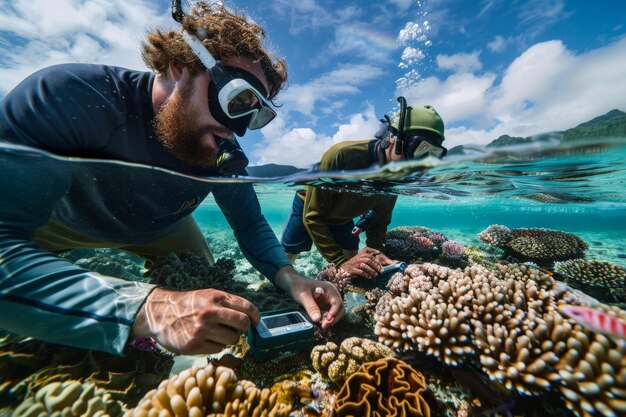
Coral reefs cover a small fraction of the ocean floor, yet they support an extraordinary share of all marine life. They protect coastlines, sustain fisheries, and underpin tourism economies across dozens of countries. Right now, they are under more stress than at any recorded point in human history — and understanding why matters whether you're a student, a diver, a policymaker, or simply someone who pays attention to the planet. 🌊
Before diagnosing what's going wrong, it helps to understand what coral reefs are. Corals are not plants or rocks — they are living animals. Each coral polyp is a tiny creature that builds a hard calcium carbonate skeleton around itself. Over centuries, billions of these skeletons stack up to form the reef structures we recognize.
What makes corals so sensitive is their relationship with zooxanthellae — microscopic algae that live inside coral tissue. These algae perform photosynthesis and supply the coral with most of its energy. In return, the coral provides the algae with shelter and nutrients. This partnership is the engine of reef life. It's also the first thing to break down when conditions change.
The single most discussed threat to coral reefs today is coral bleaching, and it's directly connected to rising ocean temperatures.
When seawater gets too warm — even by a small sustained margin above typical seasonal highs — corals become stressed and expel their zooxanthellae. Without those algae, the coral loses its color and turns ghostly white. This is bleaching. The coral isn't immediately dead at this point, but it's severely weakened, unable to feed itself efficiently, and highly vulnerable to disease.
If temperatures return to normal quickly enough, corals can recover. If the heat stress persists, the coral starves and dies. Large-scale bleaching events have been recorded with increasing frequency and severity over recent decades, affecting reef systems across the Pacific, Indian, and Atlantic Oceans — including some of the most ecologically significant reefs on Earth.
Mass bleaching events — where bleaching occurs simultaneously across vast geographic areas — were historically rare. They are now occurring more frequently and with less recovery time between episodes, which is what makes the current trend alarming to scientists.
As the ocean absorbs carbon dioxide from the atmosphere, a chemical reaction occurs that lowers the pH of seawater — making it more acidic. This process is called ocean acidification.
For coral reefs, the consequences are structural. More acidic water makes it harder for corals to build and maintain their calcium carbonate skeletons. Existing reef structures can also become more brittle and prone to erosion. While this threat operates more slowly than bleaching, it compounds the damage done by other stressors and reduces the reef's ability to recover and grow.
Climate-driven threats don't act alone. A range of additional pressures interact with warming and acidification to determine how individual reefs fare:
| Stressor | How It Damages Reefs |
|---|---|
| Overfishing | Removes herbivorous fish that control algae, allowing algae to outcompete and smother coral |
| Coastal runoff and pollution | Fertilizers and sediment from land increase nutrient levels, fueling algal blooms |
| Physical damage | Destructive fishing practices, boat anchors, and careless diving break fragile reef structures |
| Invasive species | Crown-of-thorns starfish and other predators can consume coral faster than reefs can regenerate |
| Storms and cyclones | Intensifying tropical storms cause direct physical destruction; recovery time is shrinking |
| Disease | Stressed corals are more vulnerable to bacterial and fungal infections, some of which spread rapidly |
The interaction between these stressors matters enormously. A reef that is already weakened by pollution and overfishing is far less resilient when a bleaching event arrives. A healthy, well-managed reef has a better chance of bouncing back from the same temperature spike.
Not all reefs face the same level of threat at the same time. Several factors shape relative vulnerability:
This variability is why scientists track individual reefs and why blanket statements about "all reefs" can oversimplify a complex picture.
The scientific consensus, reflected across major climate and marine research bodies, is that coral reefs are in serious, documented decline globally. The rate and severity of that decline is closely tied to how much global average temperatures rise above pre-industrial levels — the same variable at the center of international climate agreements.
Projections vary depending on emissions trajectories, but the general framework scientists use is this: the more warming, the faster the losses, and the less recovery time reefs get between bleaching events. At lower warming scenarios, some reefs are projected to persist and recover, particularly those with fewer local stressors. At higher warming scenarios, large portions of current reef habitat face conditions outside the range corals can tolerate.
This isn't a prediction about any specific reef — local conditions, conservation efforts, and even coral adaptation can shift individual outcomes. But the directional trend in the evidence is consistent. 🔬
Science is also documenting reasons why the story isn't entirely one-directional:
For anyone trying to understand where this is heading, the honest answer is that the outcome isn't fixed. It will depend on:
Each of those factors involves decisions being made at scales ranging from international policy to individual coastal management. That's why reef scientists tend to frame this issue as urgent but not yet final — the range of possible futures is still wide enough to matter.
Understanding what's happening to coral reefs means holding two things at once: the seriousness of what the data shows, and the genuine uncertainty about how much of that trajectory can still be altered. The science is clear about the direction of pressure. The outcomes remain shaped by choices still being made. 🌍